

2025 Essential Guide for Business Owners & HR Managers
As a small business owner or manager, you may be tasked with complex functions such as payroll, taxes, human resources, and employee benefits. If not managed properly, these areas can create headaches for your business and may even result in penalties, fines, or litigation. Many businesses turn to outside experts for help, but if you prefer to handle these functions in-house, where do you start? This helpful guide is your first step. It's chock-full of information and best practices to help you manage your business.
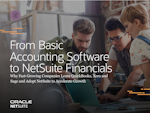
From Basic Accounting Software to NetSuite Financials
The downloadable whitepaper, "From Basic Accounting Software to NetSuite Financials," outlines the challenges that growing businesses face when relying on entry-level accounting systems and explains how transitioning to NetSuite can drive efficiency and scalability. Aimed at finance and IT decision-makers, the PDF details limitations of tools like QuickBooks and Xero, such as manual data entry, slow reporting, and lack of real-time visibility. It then presents NetSuite as a comprehensive, cloud-based solution that supports automation, compliance, and fast close cycles. The document includes success metrics, industry stats, and case studies demonstrating improved productivity and cost savings. It serves as a practical guide for organizations evaluating whether it's time to upgrade their financial systems.

The Ultimate Guide to Choosing Your Next Analytics Platform
Every organization strives to become a data-driven enterprise, leveraging data to enhance decision-making, tackle complex challenges, and boost revenue and profitability. However, many traditional BI tools struggle to keep pace with today's fast-evolving digital economy and emerging technologies like cloud computing and artificial intelligence. This calls for a modern analytics platform capable of addressing all business needs - from comprehensive reporting and real-time insights to mobile analytics. This guide outlines the essential criteria for selecting such a platform, covering high-level considerations, specific use cases, and key capabilities, so you can confidently choose the right solution to drive value for your business.

The Ultimate Buyer's Guide to Accounts Receivable Software
An organization's success relies on its finance team's ability to manage cash flow, control costs, and support growth. But inefficient accounts receivable (AR) processes - filled with manual tasks, errors, and delays - can drain resources and damage customer relationships. AR automation offers a solution by streamlining workflows, accelerating payments, and providing real-time insights. With the right tools, finance leaders can reduce Days Sales Outstanding (DSO), cut costs, and shift focus to strategic initiatives. This guide will help you evaluate your AR processes and identify opportunities to modernize for long-term success.
Zoho Books vs QuickBooks Comparison Guide
Zoho Books and QuickBooks both offer strong accounting features but cater to different needs. QuickBooks is ideal for businesses needing advanced tools, strong payroll integration, and broad third-party app support, especially in the U.S. Zoho Books, meanwhile, is more affordable, user-friendly, and integrates well with other Zoho apps, making it great for small to mid-sized businesses seeking an all-in-one solution. Your choice depends on your budget, feature needs, and whether you prefer a standalone tool or a full business suite.
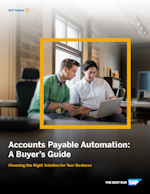
A Comprehensive Guide to Streamlining Your Accounts Payable Process
In today's fast-paced business world, automating vendor invoice management is key to boosting efficiency and supporting growth. Despite often being overlooked, invoice automation reduces manual errors, handles increased transaction volumes, and adapts to challenges like supply chain disruptions and hybrid work. Integrating invoice data with your financial systems improves visibility and helps you forecast and plan with confidence. Download our Accounts Payable Automation Buyer's Guide to find the right solution for your business.
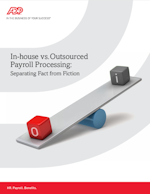
In-house vs. Outsourced Payroll Processing: Separating Fact from Fiction
Still deciding whether to keep payroll in-house or move to an outsourced model? Our white paper cuts through the noise to uncover the real pros and cons of each approach. Backed by data and industry insights, In-house vs. Outsourced Payroll Processing: Separating Fact from Fiction helps you evaluate both options objectively - highlighting costs, control, compliance, and technology integration. Whether you're a growing mid-sized business or reassessing legacy systems, this guide will equip you with the knowledge to make an informed, strategic decision.
Guide To Switching Fleet Management Software
Switching fleet management software requires careful planning to avoid disruptions. Start by identifying your current system’s shortcomings and defining your goals. Research new solutions that offer better features, scalability, and support. Once chosen, create a transition plan that includes data migration and staff training. Roll out the new system gradually and monitor performance to ensure it meets your needs.
Sage Intacct vs QuickBooks: 2026 Comparison Guide
QuickBooks is a great starting point for small and mid-sized businesses, but as your company grows, its limitations - like rigid processes, poor reporting, and lack of scalability - become clear. Manual workarounds and disconnected spreadsheets creep in, slowing you down and increasing risk. Sage Intacct offers a smarter path forward with cloud-based, business-class financial management designed for growth. With features like multi-entity support, real-time reporting, and automated processes, it delivers the performance and visibility modern organizations need. This guide helps you assess when it's time to move on - and what to look for in your next solution.
The Ultimate Guide to Order Management: Tips, Tricks, and Tools
Everything you need to know to delight your customers after they've placed an order.The moment you get your first order online is something special. You feel a rush of adrenaline, and burst into action - preparing the order, sending it to the customer, and waiting anxiously for any feedback. The thousandth time you get an order online is very different. And by the ten thousandth time, you're juggling hundreds of orders a day, multiple sales channels, and a lot of details across the business. Managing this process step by step is complex, but we'll guide you from start to finish and cover everything you need to know about order management.